




What is a TRS Cable?
A TRS cable is a connector cable designed for transmitting analog audio signals. The term “TRS” is an acronym derived from the English initials of the three conductive parts of its plug: Tip, Ring, and Sleeve
- These three distinct conductors enable TRS cables to perform diverse functions, allowing them to transmit not only unbalanced stereo audio signals (e.g., for headphone connections) but also professional balanced mono signals
- In balanced signal transmission mode, the tip typically carries the positive-phase (“hot”) signal, the ring carries the negative-phase (“cold”) signal, and the sleeve serves as ground.
- This design allows receiving equipment to effectively cancel electromagnetic interference and noise introduced during long-distance transmission through differential amplification, ensuring pure and intact audio signals. It is precisely this reliability and high-quality signal transmission capability that has established TRS cables as one of the standard configurations in the audio industry.
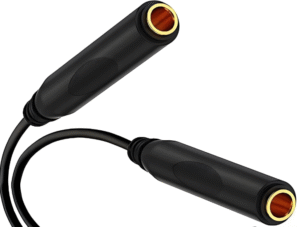
TRS Plug Sizes
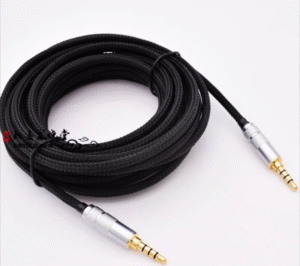
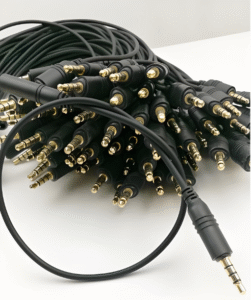
These cables accommodate various plug sizes, including 3.5mm plugs, quarter-inch plugs, and 2.5mm plugs.
6.35mm (1/4-inch): The most common and largest TRS plug size, commonly called the “quarter-inch” plug. Known for its rugged durability, it reigns supreme in professional audio applications, widely used to connect mixing consoles, audio interfaces, studio headphones, and similar equipment.
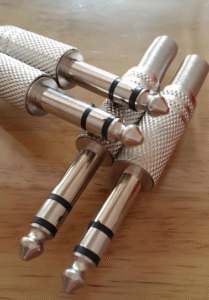
3.5mm: This size jack enables clear stereo audio transmission. Additionally, it ensures call functionality, volume control, and playback capabilities for certain mobile devices and laptops.
What’s the Difference Between TRS and TS Cables?
Although TRS and TS cables look remarkably similar, their internal structures and core functions differ fundamentally.
The fundamental reason lies in the number of conductors. A TRS cable plug contains three conductors: tip, ring, and shell. In contrast, a TS (tip-shell) cable plug has only two conductors: tip and shell.
This difference in conductor count results in distinct signal transmission characteristics:
信号の種類 TRS cables can transmit both mono そして stereo signals. TS cables, lacking one conductor, can only transmit mono signals.
耐干渉性: TRS cables support balanced signal transmission technology, effectively shielding against external electromagnetic interference (EMI) to ensure signal quality over long distances. TS cables are only suitable for short-distance signal transmission, such as for electric guitars.
Can TS cables be substituted for TRS cables?
In some scenarios, TS cables can be used as TRS cables. However, this results in weaker signals and increased susceptibility to noise interference. Conversely, substituting TRS cables for TS cables leads to unstable signal transmission.
What similarities exist between TRS cables and TS cables?
Due to similarities in appearance and application domains, TRS and TS cables are often confused.
First, their plug diameters are identical, meaning they can share the same mating connector. Second, the “outer shell” of both serves as the signal ground terminal. Finally, both are used in audio transmission applications.
What’s the Difference Between TRS and XLR Cables?
In the professional audio field, XLR cables are another common type of balanced signal transmission cable, existing in a competitive yet complementary relationship with TRS cables.
Physical Structure: XLR connectors feature a circular design with three pins (1, 2, 3) and a secure locking mechanism to prevent accidental disconnection. This makes them highly favored in demanding environments like live stage performances and outdoor events where reliability is paramount. TRS connectors lack a locking mechanism but enable faster connection and disconnection.
Durability and Professionalism: XLR connectors are widely regarded as more professional than TRS connectors and are the dedicated accessory for connecting condenser microphones. TRS cables are favored for their flexibility and are commonly used to connect devices such as audio interfaces and monitor speakers.
Functional Versatility: XLR cables primarily transmit monaural signals. TRS cables offer greater adaptability, handling both monaural and stereo signals (e.g., headphones) while also functioning as insert cables to simultaneously transmit and receive signals.
In summary, XLR cables prioritize providing the most secure device connections, while TRS cables stand out across various devices due to their multifunctionality and convenience.
Most Popular Custom TRS Cable Types
Using TRS cables isn’t a big deal, and there are plenty of TRS cables on the market that work with your devices. The real challenge lies in where to buy them. This concern is understandable—after all, no one wants to spend money on products without guarantees. If you’re looking to purchase TRS cables, JinHai is undoubtedly the safest choice.
TRS to XLR Cable
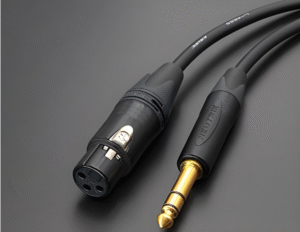
Similar to TRS cables, XLR cables also consist of three conductors. XLR cables are shielded twisted-pair cables designed for balanced connections, where one conductor serves as ground and the other as the live terminal.
TRS Cables for Guitars
While TRS cables can be used with guitars, guitar outputs produce unbalanced mono signals, making them not perfectly matched for TRS cables.
TRS and Cables
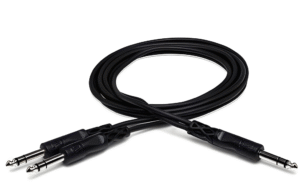
TRS Y-Cables are used when a single signal needs to be split to two different destinations.
TRS and Cables
Right-Angle TRS Cables
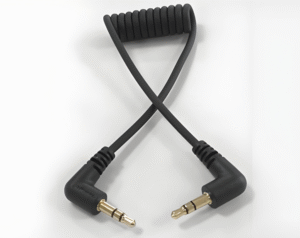
Right-angle TRS cables are better suited for situations with limited space.

TRS to RCA Cable
RCA cables feature only one signal wire and one ground wire.

TRS to TRS Cable
TRS to TRS cables transmit balanced signals. These cables contain three wires: positive, negative, and ground.
TRS Jumper Cables
TRS jumper cables connect one device to another for signal routing.
結論
While many people confuse TRS and TS cables, the difference between them is actually significant. TRS cables provide a more stable connection. Audio cables greatly influence sound quality.
Selecting the right cables and completing all preparatory work are essential for achieving optimal results in your recording studio. Therefore, you must choose TRS cables with precision.
While this may seem insignificant, selecting the appropriate TRS cables can completely transform your music production.
However, identifying the type of cable you need and when to use them requires some background knowledge, which can be challenging for many. JinHai understands your predicament and is always here to provide solutions.